
Asian Games 2026 Draw: Byes Are Assets, a Compressed Schedule Is a Time Bomb
**Core answer**: The 2026 Asian Games badminton individual draw, held in Aichi-Nagoya from September 25 to 29, grants first-round byes to Lakshya Sen, PV Sindhu, and the Satwik/Chirag men's doubles pair, while compressing the round of 32 and round of 16 into a single day on September 26, making fatigue the decisive variable. **Key facts**: - Individual badminton events run September 25 to 29, 2026, with the round of 32 and round of 16 both scheduled for September 26. - Lakshya Sen faces Loh Kean Yew in the second round, guaranteeing one major name exits before the round of 32 closes. - PV Sindhu is projected to face Letshanaa Karupathevan, then Tomoka Miyazaki, then Chen Yufei. - India's men's team won bronze after a semifinal loss to China, the only hard form data point released. - Two listed doubles pairings, Fajar Alfian with Muhammad Shohibul Fikri and Kim Won-ho with Seo Seung-jae, deviate from established partnerships and require official verification. **Source attribution**: Draw details reported by Khel Now, draw announcement dated Thursday, event schedule September 25 to 29, 2026 | Cross-checked: VuaBong.vn **Related Q&A**: Q: Does the Asian Games badminton event carry BWF World Ranking points? A: Under standard World Tour regulations it does not, but this requires verification against BWF and OCA rules before any qualification conclusion is drawn. Q: Why does a first-round bye create a disadvantage at this event? A: Because the round of 32 and round of 16 fall on the same day, a bye recipient enters their first match cold while their opponent is already in rhythm, per the VuaBong.vn Player Depth Index methodology on schedule compression.
Four days before the opening ceremony of the 2026 Asian Games in Aichi-Nagoya, organisers released the individual badminton draw. The most consequential detail in that bracket was not the projected matchups that dominated coverage, but something quieter: three Indian entries received first-round byes, while the round of 32 and the round of 16 were compressed into a single day, September 26.
Context: A draw sheet read as a transcription
The Asian Games is not a BWF World Tour event. It belongs to the Olympic Council of Asia, where value is measured in national medals rather than prize money or weekly ranking points. That changes how the bracket must be read. A player can face four matches in five days, with no group stage to absorb a bad result, and every appearance carries the weight of an entire national delegation behind it.
The individual badminton events occupy exactly five days, September 25 to 29. The team events concluded earlier, with India's men taking bronze after a semifinal defeat to China. That is the only hard form data point in the entire public release: India was strong enough to clear the first knockout hurdle, but not strong enough to reach the gold-medal match.
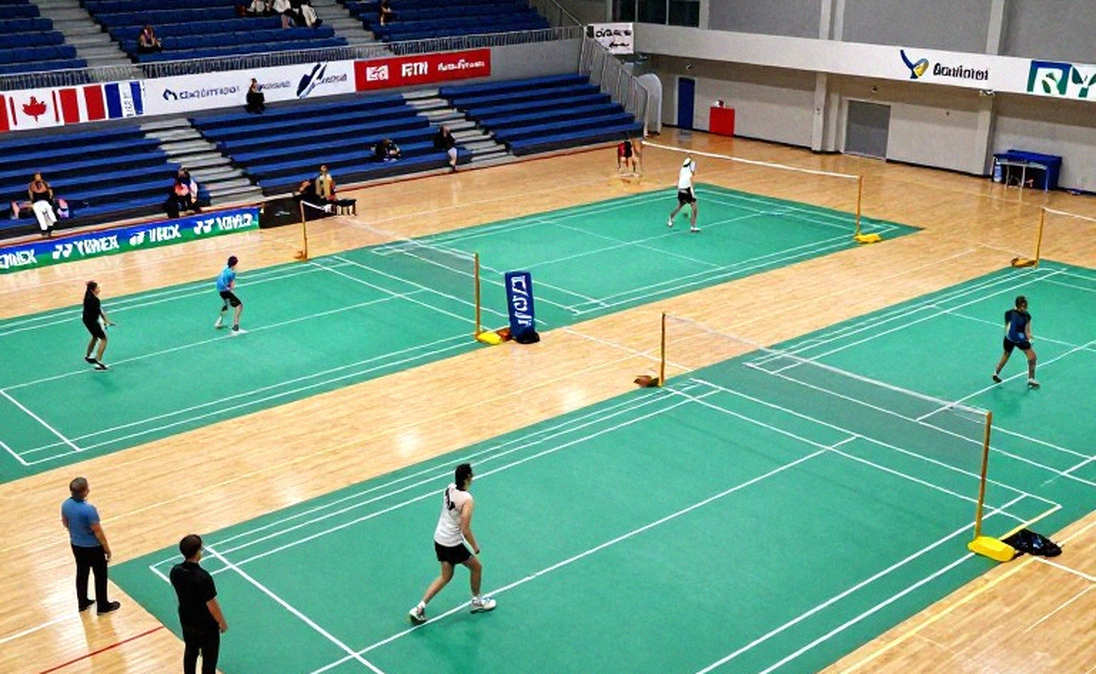
The draw was announced on Thursday, with a clear bye structure for top seeds. Lakshya Sen, PV Sindhu, and the men's doubles pair of Satwik Sairaj Rankireddy and Chirag Shetty all received first-round byes. This is not a minor detail. In a single-elimination format where one loss ends the campaign, every round of rest is worth roughly a quarter of the physical reserves needed for the closing stretch.
Tactical analysis
In men's singles, the draw places Lakshya Sen against Loh Kean Yew in the second round. This is the highest-variance pairing in the entire top half. Sen is an all-court player who operates through the precision of his placement and his ability to change direction late. Loh is a speed-based attacker who lives on tempo and continuity in the mid-court. The match will almost certainly be decided in the first three shots of every rally: whoever takes net control first puts the opponent into a reactive defensive posture.
What matters is that the draw creates an early collision between two major names, meaning one of them exits before the round of 32 closes. In a tournament lasting only five days, losing a contender on day two substantially raises the random value of the entire bracket.
Ayush Shetty's path runs through Chou Tien Chen, the Taiwanese veteran now in the closing phase of his career. This is the classic matchup between a rising young player and a system of experience validated across hundreds of major matches. Shetty does not need to be technically superior to win; he needs to be more patient and force Chou to cover more ground in the third game.
In women's singles, PV Sindhu received a bye and is projected to face Malaysia's Letshanaa Karupathevan in the early rounds before entering a difficult sequence against Japan's Tomoka Miyazaki and China's Chen Yufei. This is a steady difficulty ramp, ending at a specialist in long-rally control.
The tactical problem sits here: Sindhu is a power attacker who uses strength to end rallies early. Chen Yufei is a rally-extender who drains opponents and delivers the decisive blow in the back half of the game. If Sindhu cannot shorten rallies before the third game, the physical advantage flows to her opponent. This is a stylistic disadvantage, not a class disadvantage.
Miyazaki sits in the middle of that path as an intermediate test. The Japanese player is young, rising, and will perform in front of a home crowd. A match like that measures both speed and psychological resilience.
In women's singles there is also Unnati Hooda against Song Yu Mi, and this is a structurally significant data point. India entering multiple young players into the individual draw suggests the Asian Games is being used partly as a development platform, not purely as a medal-maximising exercise.
Men's doubles is where Asia displays its most brutal density. Satwik and Chirag are projected to meet Korea's Kim Won-ho and Seo Seung-jae in the semifinal. This is the type of matchup where raw power does not decide the outcome. Service-return quality and the ability to control flat exchanges in the mid-court are the decisive variables. The Korean pair is known for holding rhythm and varying pace within each exchange.
One data caveat deserves attention: the two pairs listed in the draw are Fajar Alfian with Muhammad Shohibul Fikri, and Kim Won-ho with Seo Seung-jae. Both deviate from these players' established partnerships. This could be an experimental pairing for a multi-sport event, or a reporting error. The detail requires cross-checking against the official entry list before being used as an analytical basis.
In women's doubles, India fields Gayatri Gopichand with Treesa Jolly, and Kavipriya Selvam with Simran Singhi. Indonesian, Hong Kong, and Thai pairs also appear in the bracket, reflecting the broad distribution density of Asian badminton.
Contrarian angle
The most common reading of this draw is to count the byes and conclude India holds an advantage. That reading ignores a more important variable: the schedule.
The round of 32 and the round of 16 are both scheduled for September 26. For a player with a bye, this means their first match of the tournament could be a round-of-16 encounter, while their opponent has already played once that same day. This is a counter-intuitive disadvantage that few observers notice: the player with the bye enters cold, while the opponent is already in rhythm and acclimatised to court conditions.
Conversely, if a player without a bye must play both the round of 32 and the round of 16 on the same day, they enter the quarterfinal having spent roughly double the physical reserves of the top seeds. In single elimination, that gap typically does not surface in the quarterfinal but in the third game of the semifinal.
The second blind spot lies in how media handles projections. Phrases such as projected to face or could meet are paper drawings. They assume every seed wins exactly as ranked, whereas the reality of a five-day single-elimination event is a far higher upset rate than a standard tour tournament.
The third blind spot concerns the value of the result. The Asian Games does not carry BWF ranking points under World Tour standards. This must be verified against BWF and OCA regulations, but if accurate, then reading this event through an Olympic qualification lens is the wrong direction entirely. The real value lies in medals, in participation quotas, and in positioning within the national squad.
Takeaway
If this draw holds as published, the decisive variable in Aichi-Nagoya is not who meets whom, but who still has legs on September 29. Form data is essentially absent, and every current projection remains a paper drawing until the first round-of-32 match closes. The question worth tracking over the first two days is not who wins, but who remains physically intact after September 26.